Live, mentor-led lessons
Every lesson happens in real time with a mentor — never a prerecorded video.
Full details for this course are arranged during your consultation — request one and we will walk you through it.

This curriculum is designed specifically for children living abroad (emigrants) in an online school format, starting Georgian from the alphabet. The aim of the course is to master the Georgian alphabet (reading and writing), develop phonetic skills and acquire lively spoken language through everyday role-play dialogues. The six-month programme is organised by theme: from sounds and greetings, learners gradually move on to family, everyday needs, daily routine, nature and short fairy tales. Teaching uses cards and visual illustrations, with 50% of lesson time devoted to live communication and dialogues and 50% to reading and writing. Periodic tasks to talk in Georgian with family members support a native-language environment. By the end of the course, learners write a short composition independently, build a monologue of 5-10 sentences and give a graduation online presentation or video recording.
Getting to Know the Sounds and Greeting Each Other
The goal is to get used to the sounds of Georgian, learn the vowels and master etiquette forms. In reading and writing, learners study the vowels (ა, ე, ი, ო, უ) — their written form, writing and simple syllables. The spoken minimum covers greeting, saying goodbye and introducing oneself: "Hello" ("გამარჯობა"), "Goodbye" ("ნახვამდის"), "My name is..." ("მე მქვია..."), "How are you?" ("როგორ ხარ?"). The practical activity is the role play "Getting to know each other in an online lesson" and interactive games.
Our World: Family and Toys
The goal is to learn the first consonants and talk about one's own family and favourite things. In reading and writing, learners study the consonants (მ, ნ, ბ, პ, გ, კ, დ, ტ, ლ, ს) and begin forming the first words (დედა, მამა, ბაბუა, ია, კატა). The spoken minimum includes "This is..." ("ეს არის..."), "I have..." ("მე მაქვს..."), colours and toys. The practical activity is showing family photos or a favourite toy on screen and talking about them.
Finishing the Alphabet and Everyday Requests
The goal is to complete the alphabet and learn to express everyday needs. In reading and writing, learners study the difficult sounds and the remaining consonants (ც, ჩ, წ, ჭ, ძ, ჯ, ჰ, ფ, ქ, ღ, ხ, შ, ჟ) and do their first slow reading of a text. The spoken minimum includes "I'm hungry" ("მშია"), "I'm thirsty" ("წყალი მწყურია"), "I don't understand" ("არ მესმის"), "Please repeat" ("გთხოვთ, გამიმეორეთ"), "How much does it cost?" ("რა ღირს?"). The practical activity is the role play "In a shop / in a café".
My Home, My Room and My Daily Routine
The goal is to expand sentences, use verbs and describe a daily routine. In reading and writing, learners write question sentences (who? what? where? when?) and short written answers. The spoken minimum covers the morning and evening routine ("I get up" — "ვდგები", "I have breakfast" — "ვსაუზმობ", "I play" — "ვთამაშობ", "I study" — "ვსწავლობ") and "I like..." ("მე მიყვარს..."). The practical activity is an online "room tour": the learner shows objects and names them in Georgian.
Environment, Nature and Little Fairy Tales
The goal is to get acquainted with the first literary texts and to describe emotions and weather. In reading and writing, learners read short sketches by Iakob Gogebashvili and adapted fairy tales, and learn to retell the content briefly. The spoken minimum includes weather ("It's raining" — "წვიმს", "It's sunny" — "მზეა", "It's cold" — "ცივა"), emotions ("I'm happy" — "მიხარია", "I'm sad" — "მოწყენილი ვარ") and describing characters. The practical activity is a role-play of fairy-tale characters in the lesson.
My Little Story and My Homeland
The goal is to integrate what has been learned, practise free speech and give a small presentation. In reading and writing, the learner independently writes a short composition ("My Family", "My Friend" or "My Summer"). The spoken minimum is building a monologue of 5-10 sentences about oneself and one's hobbies. The practical activity is a graduation online presentation or video recording "I can already read and speak Georgian!".
Every lesson happens in real time with a mentor — never a prerecorded video.
Your mentor follows your progress and responds to how you actually learn.
Progress is tracked as you go, so you always know where you stand.
Schedules are agreed in advance and shown in Tbilisi time, wherever you are.
Georgian children and teenagers living abroad who understand basic Georgian but want to speak it more confidently. The course suits learners who grow up between two cultures and want to express their thoughts, emotions and opinions in Georgian, while building practical life skills: critical thinking about online information, digital safety, and resolving conflicts peacefully. Lessons are held online in small groups, 35–40 minutes once a week.
We will confirm the right level, group and schedule for you.
6-Month Intensive Curriculum in Georgian Language and Literature
Course information
An online course for children and teenagers living abroad who need to strengthen their spoken Georgian and build practical life skills. Students learn to express their opinions freely in Georgian, reason and argue on practical topics such as cultural diversity, media literacy and everyday ethics. Lessons are interactive and built on discussions, audio-visual materials and real-life cases. By the end of the course, students will be able to describe their emotions and dual cultural experience in Georgian, critically evaluate information spread on social media and the internet (spotting fakes), and communicate peacefully in Georgian in everyday relationships and conflict situations.
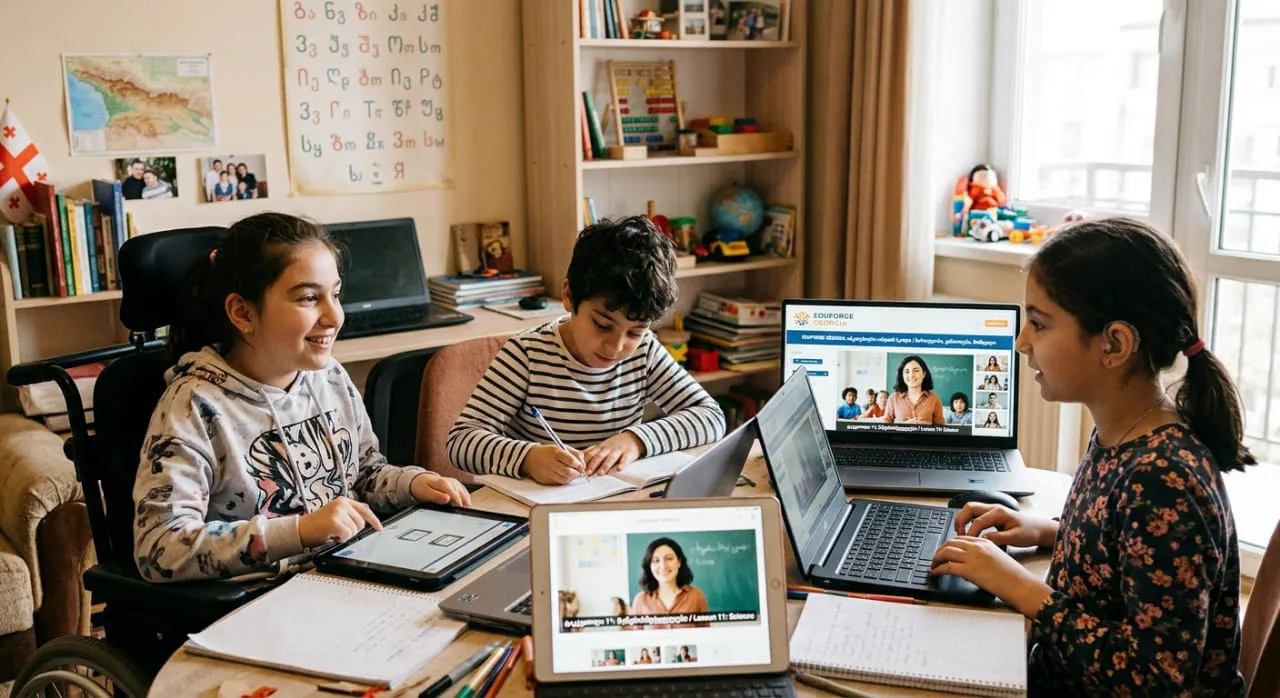
The program is intended for students with special educational needs (SEN) and with academic, behavioral, ADHD-related and emotional difficulties. It is delivered through online distance learning, individually or in small groups, within an individual education plan (IEP) or an adapted program. The main aim is to support the students' academic, cognitive, speech, behavioral, attention-regulation and emotional skills, to maximize their engagement in learning and to help them realize their individual potential. Teaching relies on adapted online strategies such as large clear fonts, visual schedules, short learning blocks, movement breaks, visual timers and positive reinforcement. The 16-week program (semester-based or continuous support) involves parents throughout and ends with an assessment of progress, a portfolio presentation and recommendations for the future.
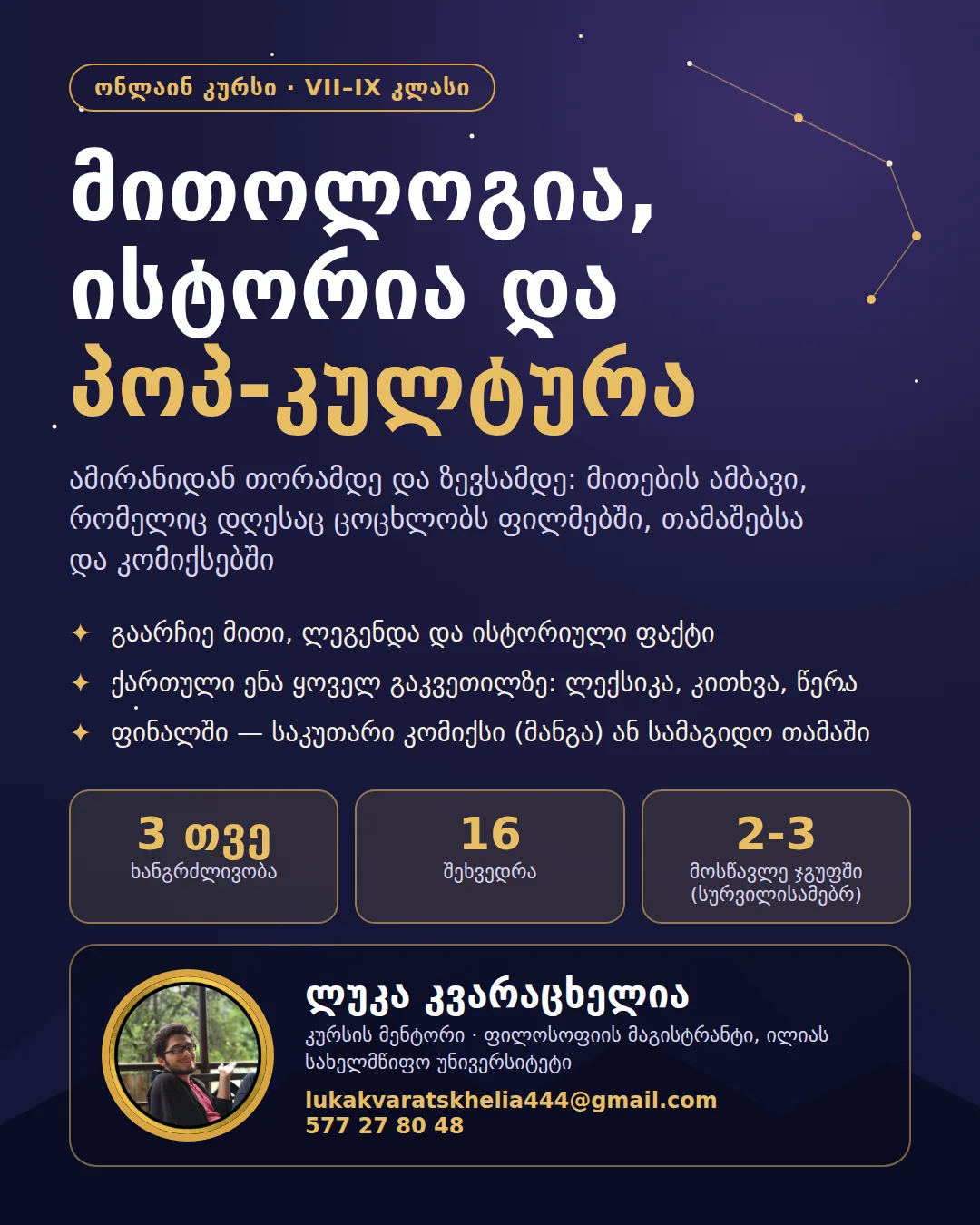
The course is designed for Georgian children in grades VII–IX who live in the diaspora. Its aim is to show where the gods and heroes of films, comics and games come from, and to strengthen the learners' living connection with the Georgian language and cultural memory. Students get to know Scandinavian, Greek-Roman, Eastern and, above all, Georgian mythology, from Amiran to the Golden Fleece of Colchis. The course is taught online in a small group of up to 12 students, through video meetings and a shared Padlet space. Every lesson includes a Georgian Language Corner of about 10 minutes: 5–7 new words, a short Georgian text and a short writing task at two difficulty levels. By the end, students can tell a myth, a legend and a historical fact apart, read a source critically, and present their own comic (manga) or board game together with a Padlet portfolio.