Our Learning Programs
Civic Education and Georgian Language Practice for Emigrant Students
An online course for children and teenagers living abroad who need to strengthen their spoken Georgian and build practical life skills. Students learn to express their opinions freely in Georgian, reason and argue on practical topics such as cultural diversity, media literacy and everyday ethics. Lessons are interactive and built on discussions, audio-visual materials and real-life cases. By the end of the course, students will be able to describe their emotions and dual cultural experience in Georgian, critically evaluate information spread on social media and the internet (spotting fakes), and communicate peacefully in Georgian in everyday relationships and conflict situations.
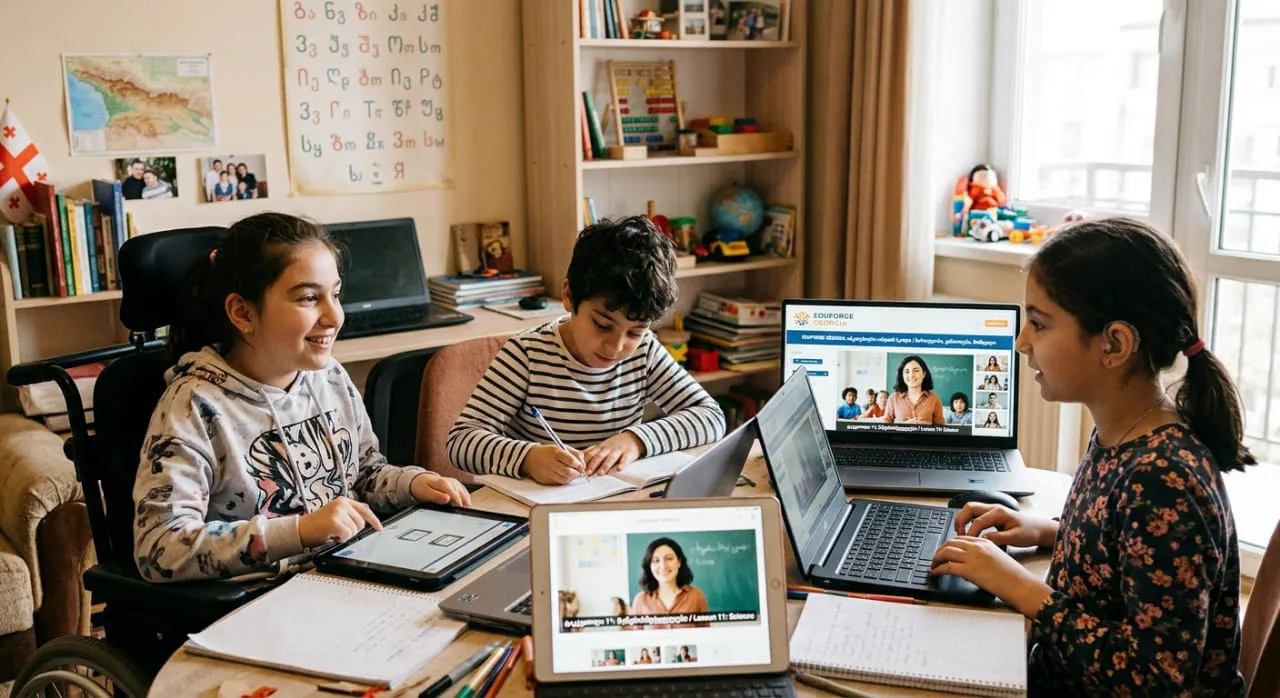
Inclusive Education Learning and Support Program (Online Format)
The program is intended for students with special educational needs (SEN) and with academic, behavioral, ADHD-related and emotional difficulties. It is delivered through online distance learning, individually or in small groups, within an individual education plan (IEP) or an adapted program. The main aim is to support the students' academic, cognitive, speech, behavioral, attention-regulation and emotional skills, to maximize their engagement in learning and to help them realize their individual potential. Teaching relies on adapted online strategies such as large clear fonts, visual schedules, short learning blocks, movement breaks, visual timers and positive reinforcement. The 16-week program (semester-based or continuous support) involves parents throughout and ends with an assessment of progress, a portfolio presentation and recommendations for the future.
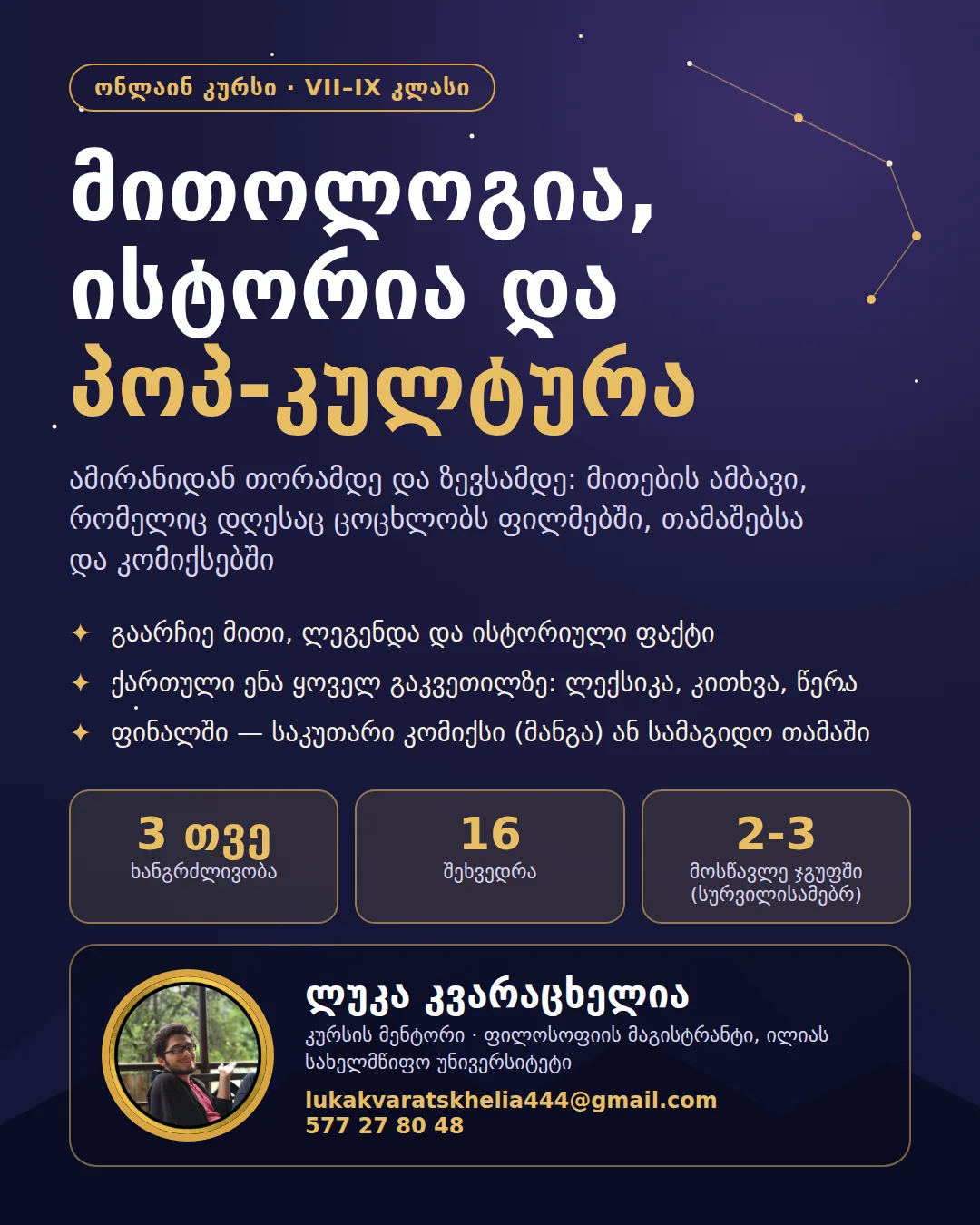
Mythology, History and Pop Culture
The course is designed for Georgian children in grades VII–IX who live in the diaspora. Its aim is to show where the gods and heroes of films, comics and games come from, and to strengthen the learners' living connection with the Georgian language and cultural memory. Students get to know Scandinavian, Greek-Roman, Eastern and, above all, Georgian mythology, from Amiran to the Golden Fleece of Colchis. The course is taught online in a small group of up to 12 students, through video meetings and a shared Padlet space. Every lesson includes a Georgian Language Corner of about 10 minutes: 5–7 new words, a short Georgian text and a short writing task at two difficulty levels. By the end, students can tell a myth, a legend and a historical fact apart, read a source critically, and present their own comic (manga) or board game together with a Padlet portfolio.
Children's Cooking
"Children's Cooking" is a practical culinary course for children and teenagers who want to learn the basics of cooking, prepare simple dishes and develop practical skills. The course aims to teach the main rules of working in the kitchen, introduce ingredients and basic culinary techniques, and build independence, creative thinking and teamwork. Lessons follow the principle "I see — I learn — I do it myself": the mentor, chef Luka Darsalia, first demonstrates a technique, and then the children complete the task step by step, taking their age and experience into account. Work with hot surfaces, the oven, boiling water and sharp tools is always done under direct supervision. Over 12 weeks the children get to know the cuisines of different countries and prepare breakfast, salads, pasta, pizza, a burger, an Asian bowl, desserts and a Georgian dish. By the end of the course, students can follow hygiene and safety rules, read a recipe, help prepare simple dishes, decorate and present their own dish, and work as part of a team. No previous experience is required.
6-Month Intensive Curriculum in Georgian Language and Literature
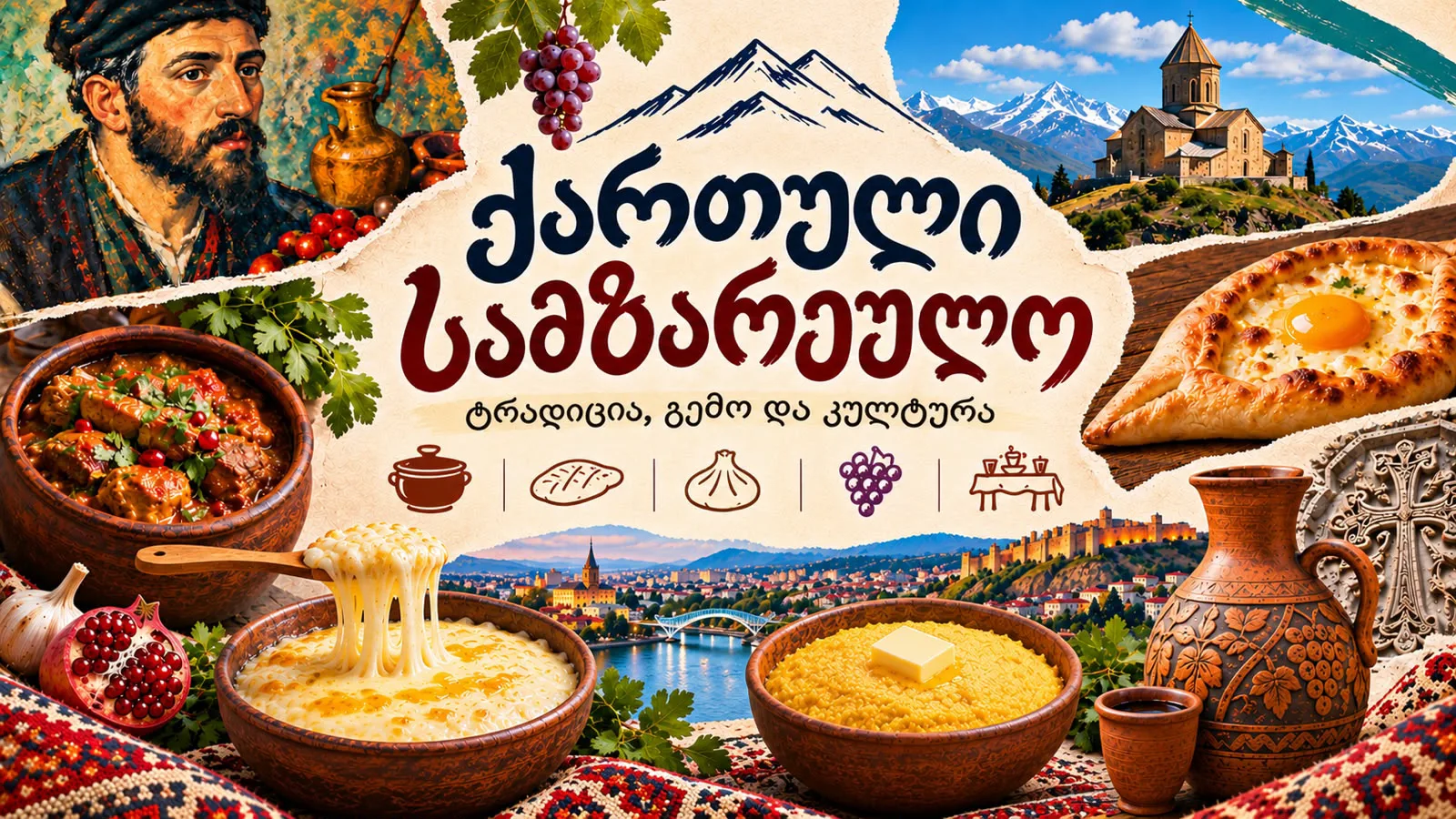
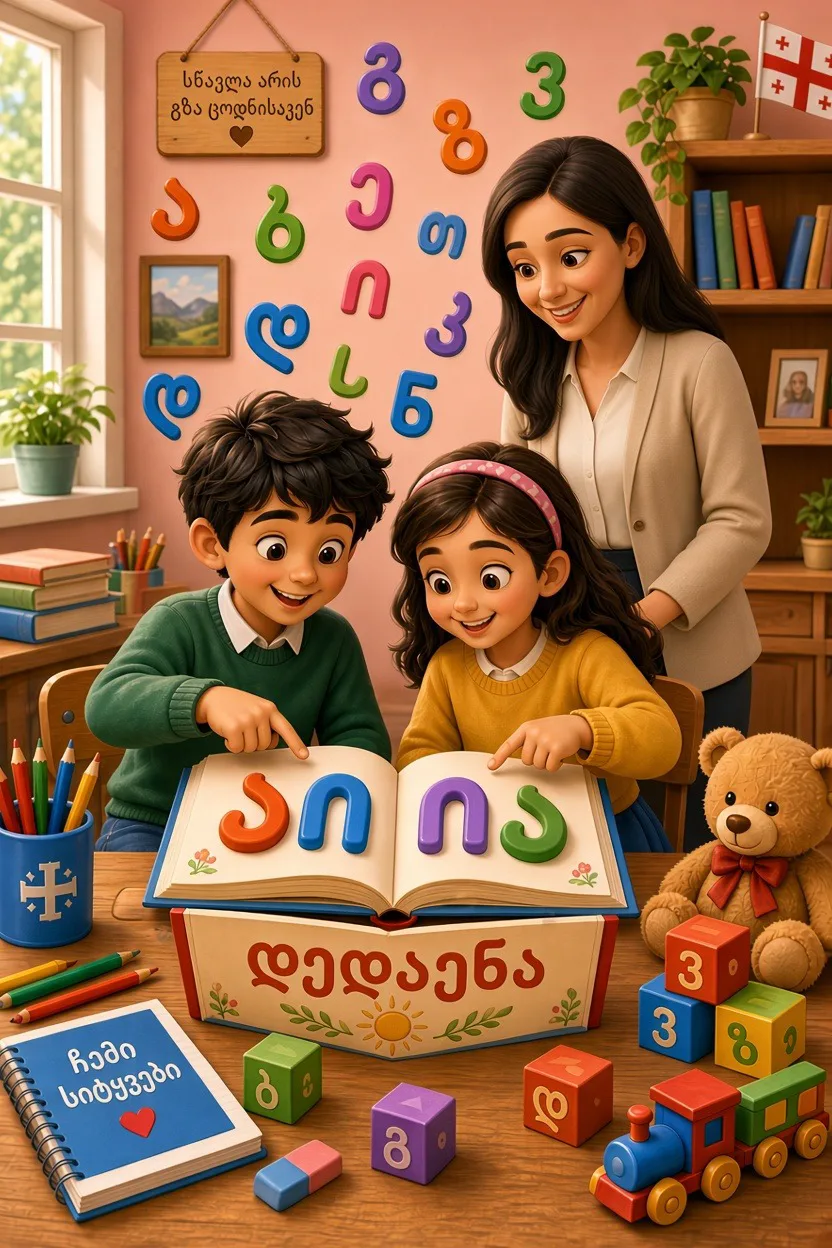
This curriculum is designed specifically for children living abroad (emigrants) in an online school format, starting Georgian from the alphabet. The aim of the course is to master the Georgian alphabet (reading and writing), develop phonetic skills and acquire lively spoken language through everyday role-play dialogues. The six-month programme is organised by theme: from sounds and greetings, learners gradually move on to family, everyday needs, daily routine, nature and short fairy tales. Teaching uses cards and visual illustrations, with 50% of lesson time devoted to live communication and dialogues and 50% to reading and writing. Periodic tasks to talk in Georgian with family members support a native-language environment. By the end of the course, learners write a short composition independently, build a monologue of 5-10 sentences and give a graduation online presentation or video recording.
Georgian Language for Emigrant Students – Interactive Georgian Language Course (A1–A2, ages 7–8)
The course is designed for emigrant Georgian children aged 7–8 who are growing up between two cultures and whose connection to Georgian is often limited to the family. Its aim is for Georgian to become not a "compulsory lesson" but a living space of play and discovery, so that children learn the language, come to love it and use it with confidence. Lessons are held live online, twice a week for 40 minutes, in a group of 4–8 students, and teaching is based on play, drawing and action: children draw, act out scenes, recite poems and make paper products. In every lesson they speak Georgian, learn thematic vocabulary and simple structures, listen to short Georgian poems and tales, and study the alphabet step by step. Every module ends with a small product and a short oral presentation. By the end, children know all 33 letters of the Georgian alphabet, read simple words, use everyday vocabulary and speak in simple sentences.
Georgian Language, Literature and Cultural Thinking
This course is designed for older Georgian emigrant students who have a good command of Georgian and are ready to study literature in depth. Its aim is to develop literary text analysis, critical thinking and written and oral expression, and to deepen Georgian cultural identity. The course consists of seven thematic modules and combines classical and contemporary texts, prose and poetry, fiction and non-fiction. Students work through close reading, discussions and debates, short essays and reflective notes, creative tasks, and by connecting the texts to their own experience. By the end of the course, students will be able to analyse a text in depth, express their own opinion in a well-argued way in writing and speech, and see the link between literature and personal life.
A New Life for Georgian Art – An Interactive Art Course for Emigrant Georgian Students
The course is designed for emigrant Georgian children who grow up between two cultures and whose connection to Georgian often weakens in everyday life. Its aim is to turn Georgian cultural heritage from a "lesson about the past" into a living, contemporary and interesting space, and to deepen the connection between the children and Georgian language, art and identity. Lessons are held online: live sessions are combined with a digital workspace on Padlet and four short video instructions (Padlet, Canva, audio stories, simple animation). The teaching follows project-based learning (PBL) and STEAM, so students act as researchers and creators, and every module ends with a final product and a short presentation. Over 6 months (48 lessons of 60 minutes, two per week) the children get to know five Georgian artists and Georgian ornament, and in every lesson they speak Georgian, learn topical vocabulary and write short texts. As a result they gain real practice in speaking and writing Georgian, knowledge of Georgian art, digital skills and creative confidence, and they finish each module with a ready project, shown at two festivals with parents and certificates.