Live, mentor-led lessons
Every lesson happens in real time with a mentor — never a prerecorded video.
Full details for this course are arranged during your consultation — request one and we will walk you through it.
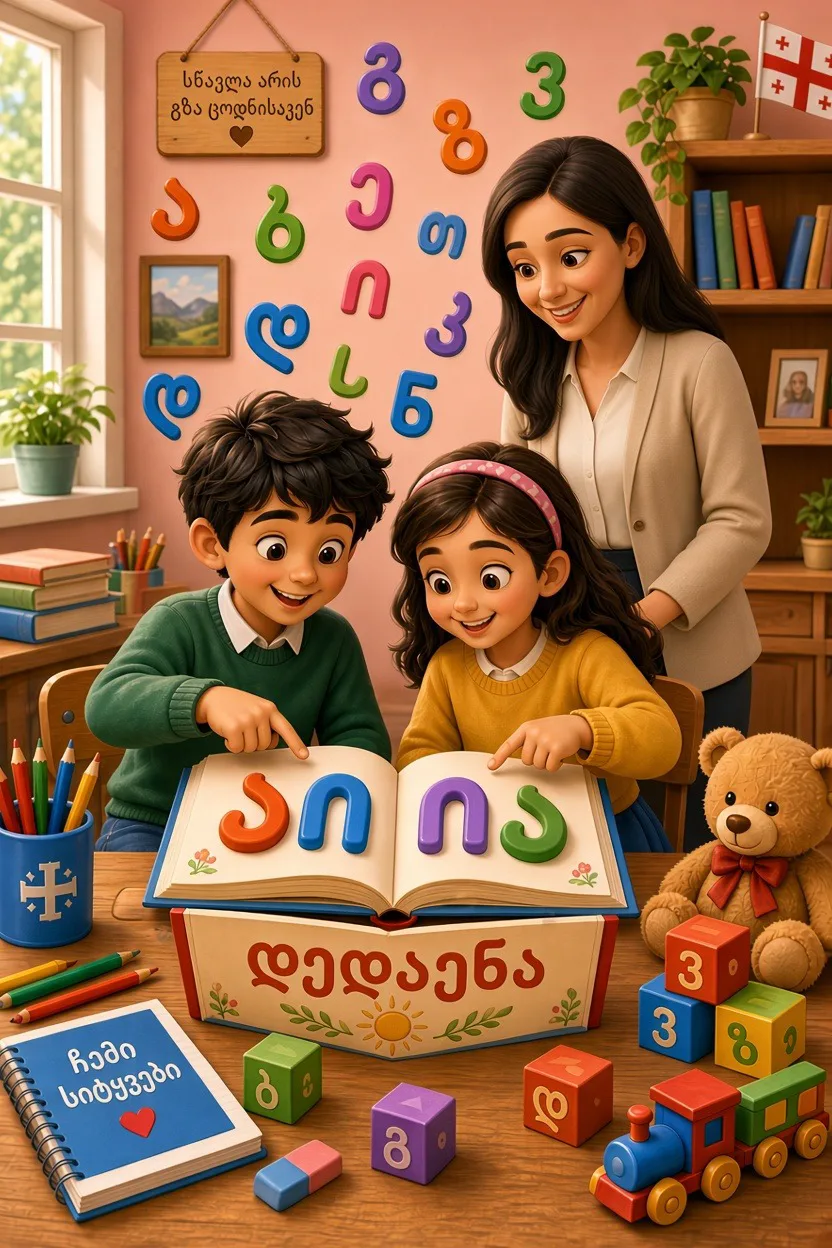
The course is designed for emigrant Georgian children aged 7–8 who are growing up between two cultures and whose connection to Georgian is often limited to the family. Its aim is for Georgian to become not a "compulsory lesson" but a living space of play and discovery, so that children learn the language, come to love it and use it with confidence. Lessons are held live online, twice a week for 40 minutes, in a group of 4–8 students, and teaching is based on play, drawing and action: children draw, act out scenes, recite poems and make paper products. In every lesson they speak Georgian, learn thematic vocabulary and simple structures, listen to short Georgian poems and tales, and study the alphabet step by step. Every module ends with a small product and a short oral presentation. By the end, children know all 33 letters of the Georgian alphabet, read simple words, use everyday vocabulary and speak in simple sentences.
Hello, I am...
Greetings and farewells, "My name is...", "What is your name?". Children draw their own name card. (Module 1 – First Steps in the Alphabet; lesson 1)
The Georgian alphabet: vowels
Georgian has 33 letter-sounds: 5 vowels and 28 consonants. Children get to know the letters ა, ე, ი, ო, უ and the words "ია" (violet), "უთო" (iron). (Lesson 2)
Letters თ, ს
Syllables თა, თე, თი, თო, თუ; words: თითი (finger), თათი (paw), საათი (clock), თასი (bowl). (Lesson 3)
Letters მ, ნ
Words: მამა, მაია, ნანა, ნინო, თმა, მთა; first sentences: "Here is Dad" („აი მამა“), "This is Nino" („ეს ნინოა“). (Lesson 4)
Letters რ, დ, ჩ
Words: თარო, დანა, დედა, ჩანთა, ჩაი, რადიო; question and answer: "What is this? — This is a bag" („რა არის ეს? — ეს არის ჩანთა“). (Lesson 5)
Revision of the first 12 letters
Reading, dictation, building words from jumbled letters, and the game "Find the letter" („იპოვე ასო“). (Lesson 6)
My family
Vocabulary: დედა, მამა, და, ძმა, ბებია, ბაბუა; structure: "This is my mother" („ეს ჩემი დედაა“). Children draw their family and name its members. Listening text: "Everyone loves their own mummy" („ყველას თავისი დედიკო უყვარს“, simplified). (Lesson 7)
Letters ბ, გ, ვ
Words: ბებია, ბაბუა, გოგო, ვაშლი, ბალი; "This is... / This is not..." („ეს არის... / ეს არ არის...“). At the end of the module children show their "Alphabet notebook"; module product: "My Alphabet Notebook" (first 15 letters and a name card). (Lesson 8)
Letters ზ, კ, ლ
Words: ეზო, ზებრა, კაბა, ლია, კალამი, ლამაზი; "Where is it? — Here it is. There it is." („სად არის? — აქ არის. იქ არის.“). (Module 2 – Words and Numbers; lesson 9)
Letters ქ, შ, ხ
Words: ქოლგა, შაქარი, შოკოლადი, ხე, ხუთი, ოთახი; the questions "Who?" („ვინ?“) and "What?" („რა?“). (Lesson 10)
Numbers 1–10
Numbers from one to ten; "How many is it?" („რამდენია?“). Counting with toys and cards. (Lesson 11)
Revision and mid-course assessment
Recognising letters, reading simple words, naming 6–8 words from pictures, and a short dialogue "What is your name?" („რა გქვია?“). (Lesson 12)
Letters პ, ჟ, ტ
Words: პური, პეპელა, პალტო, ჟოლო, ჟირაფი, ტორტი, ტყე, ტბა. (Lesson 13)
Letters ფ, ყ
Words: ფოთოლი, ფანქარი, ფული, ყვავილი, ყველი, ყავა; new / old (ახალი / ძველი). (Lesson 14)
Colours
Red, blue, green, yellow, white, black; "This is red" („ეს წითელია“). Children draw with coloured pencils and name the colours. (Lesson 15)
What I like
"I like cheese" („მე მიყვარს ყველი“), "I don't like coffee" („მე არ მიყვარს ყავა“). Children draw their favourite food and add new words to their "Dictionary". Module product: "My Dictionary" – an illustrated paper dictionary. (Lesson 16)
Letters ძ, ც, ღ
Words: ძაღლი, ცა, ცხვირი, ღამე, დღე; "What kind?" („როგორი?“) — hot / cold, big / small. (Module 3 – My World; lesson 17)
Letters წ, ჭ, ჯ, ჰ
Words: წიგნი, წყალი, ჭიქა, ჯიბე, ჰამაკი, გამარჯობა. The last letters of the alphabet and revision of the whole alphabet. (Lesson 18)
Animals
ძაღლი, კატა, დათვი, ჟირაფი, პეპელა; "I have a dog" („მე მყავს ძაღლი“), "I have a pencil" („მე მაქვს ფანქარი“). Listening text: "Komble" („კომბლე“, adapted). (Lesson 19)
My room
Room, house, table, chair, shelf, door (ოთახი, სახლი, მაგიდა, სკამი, თარო, კარი); "Where is it? — It is in the bag" („სად არის? — ჩანთაში არის“). (Lesson 20)
School and my bag
Book, notebook, pencil, pen, teacher, friend; "This is my bag" („ეს ჩემი ჩანთაა“). Listening text: "Kindness is contagious" („სიკეთე გადამდებია“). (Lesson 21)
Weather
Sun, rain, snow, wind, cloud; "It is cold" („ცივა“), "It is hot" („ცხელა“), "It is raining" („წვიმს“). Children draw the weather; poem "Sun, come out, come out" („მზეო, ამოდი, ამოდი“). (Lesson 22)
Georgia and Tbilisi
Georgia, Tbilisi, capital, flag, Georgian (language), Georgian (person); "Tbilisi is a big city" („თბილისი დიდი ქალაქია“). (Lesson 23)
"My First Georgian Book": presentation and final assessment
Children present to each other their handmade 6–8-page book (name, family, favourite food, animal, colour, Tbilisi) in a short oral presentation, and take a short final assessment of the 3-month course. (Lesson 24)
Clock and numbers 1–20
Numbers and the question "What time is it?" („რომელი საათია?“). (Module 4 – My Day and My Home; week 13)
My day
Morning, noon, evening, night; "I wake up" („ვიღვიძებ“), "I have breakfast" („ვსაუზმობ“), "I go to sleep" („ვიძინებ“). (Week 14)
Our house
Rooms and furniture; children draw their own house. (Week 15)
My friend
Hair, eyes, nose; "He/She has..." („მას აქვს...“); a portrait of a friend. Module product: "My Day" – an illustrated sheet with clocks and activities. (Week 16)
Where am I from?
Countries, nationality and languages; "I am from..." („მე ვარ... -დან“), "I live..." („მე ვცხოვრობ...“). (Module 5 – My Country and Animals; week 17)
Domestic animals
Cow, horse, sheep, dog and their young. Text: "The Flea and the Ant" („რწყილი და ჭაინჭველა“). (Week 18)
The zoo and wild animals
Tail, wing, beak, horn; describing an animal. (Week 19)
The seasons
Spring, summer, autumn, winter and the corresponding weather. Text: "The Seasons" („წელიწადის დროები“). Module product: "My Two Countries" poster (Georgia and the child's country of residence) and a short book of animals. (Week 20)
At the supermarket and the market
Fruit, vegetables, price, lari; "How much does it cost?" („რა ღირს?“), "Please weigh it for me" („ამიწონეთ“). Text: "The Proud Flower" („ამაყი ყვავილი“). (Module 6 – Market, Georgia and Professions; week 21)
At the clothes shop
Clothes, size, colour; "I want..." („მინდა...“), "I like..." („მომწონს...“). Texts: "The Chatterbox" („ცრუპენტელა"), "The Strength of Unity" („ძალა ერთობისა“). (Week 22)
The regions of Georgia
Kakheti, Imereti, Svaneti, Adjara, Tbilisi; the map and regions. Additional teacher's source: "Stories from My Country 2" („ამბები ჩემი ქვეყნიდან 2“, relevant regions, simplified for children). (Week 23)
Professions, revision and final assessment
"Who does what?" („ვინ რას აკეთებს?“) – teacher, doctor, driver, cook; revision and assessment of the 6-month course. Text: "Four Wishes" („ოთხი სურვილი“). Module product: a market scene (role play with paper money and objects) and a hand-drawn map of Georgia. (Week 24)
My flat (month 7)
A2 level. Rooms and furniture, "what stands, lies, hangs where"; children draw and describe their own room. (Module 7)
Visiting (month 8)
Relatives (uncle, aunt, father's sister, cousin), inviting, an invitation card. (Module 8)
Georgian cuisine (month 9)
Food products, khachapuri, khinkali, a simple recipe; children write their own recipe. (Module 9)
My city and travel (month 10)
Places in the city, giving directions (right, left), transport, tickets. (Module 10)
Village, nature and health (month 11)
Village life and harvest; parts of the body, the doctor, "It hurts" („მტკივა“). (Module 11)
Hobbies, picnic and final project (month 12)
Hobbies, trips out of town; the final project "My Georgian Year" („ჩემი ქართული წელი“, a handmade book) and the final assessment. (Module 12)
Every lesson happens in real time with a mentor — never a prerecorded video.
Your mentor follows your progress and responds to how you actually learn.
Progress is tracked as you go, so you always know where you stand.
Schedules are agreed in advance and shown in Tbilisi time, wherever you are.
Georgian children and teenagers living abroad who understand basic Georgian but want to speak it more confidently. The course suits learners who grow up between two cultures and want to express their thoughts, emotions and opinions in Georgian, while building practical life skills: critical thinking about online information, digital safety, and resolving conflicts peacefully. Lessons are held online in small groups, 35–40 minutes once a week.
We will confirm the right level, group and schedule for you.
Georgian Language for Emigrant Students – Interactive Georgian Language Course (A1–A2, ages 7–8)
Course information
An online course for children and teenagers living abroad who need to strengthen their spoken Georgian and build practical life skills. Students learn to express their opinions freely in Georgian, reason and argue on practical topics such as cultural diversity, media literacy and everyday ethics. Lessons are interactive and built on discussions, audio-visual materials and real-life cases. By the end of the course, students will be able to describe their emotions and dual cultural experience in Georgian, critically evaluate information spread on social media and the internet (spotting fakes), and communicate peacefully in Georgian in everyday relationships and conflict situations.
The program is intended for students with special educational needs (SEN) and with academic, behavioral, ADHD-related and emotional difficulties. It is delivered through online distance learning, individually or in small groups, within an individual education plan (IEP) or an adapted program. The main aim is to support the students' academic, cognitive, speech, behavioral, attention-regulation and emotional skills, to maximize their engagement in learning and to help them realize their individual potential. Teaching relies on adapted online strategies such as large clear fonts, visual schedules, short learning blocks, movement breaks, visual timers and positive reinforcement. The 16-week program (semester-based or continuous support) involves parents throughout and ends with an assessment of progress, a portfolio presentation and recommendations for the future.
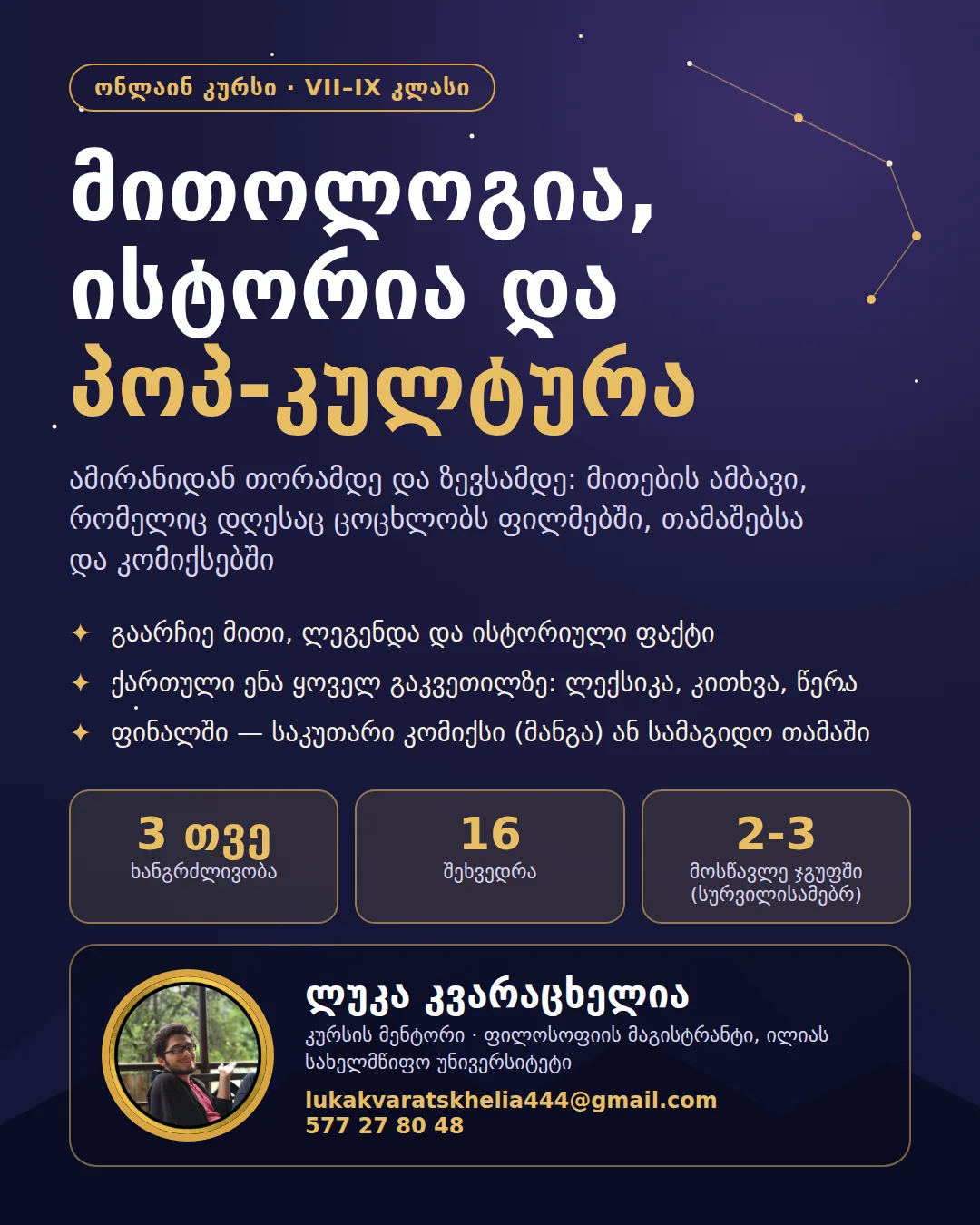
The course is designed for Georgian children in grades VII–IX who live in the diaspora. Its aim is to show where the gods and heroes of films, comics and games come from, and to strengthen the learners' living connection with the Georgian language and cultural memory. Students get to know Scandinavian, Greek-Roman, Eastern and, above all, Georgian mythology, from Amiran to the Golden Fleece of Colchis. The course is taught online in a small group of up to 12 students, through video meetings and a shared Padlet space. Every lesson includes a Georgian Language Corner of about 10 minutes: 5–7 new words, a short Georgian text and a short writing task at two difficulty levels. By the end, students can tell a myth, a legend and a historical fact apart, read a source critically, and present their own comic (manga) or board game together with a Padlet portfolio.