Live, mentor-led lessons
Every lesson happens in real time with a mentor — never a prerecorded video.
Full details for this course are arranged during your consultation — request one and we will walk you through it.
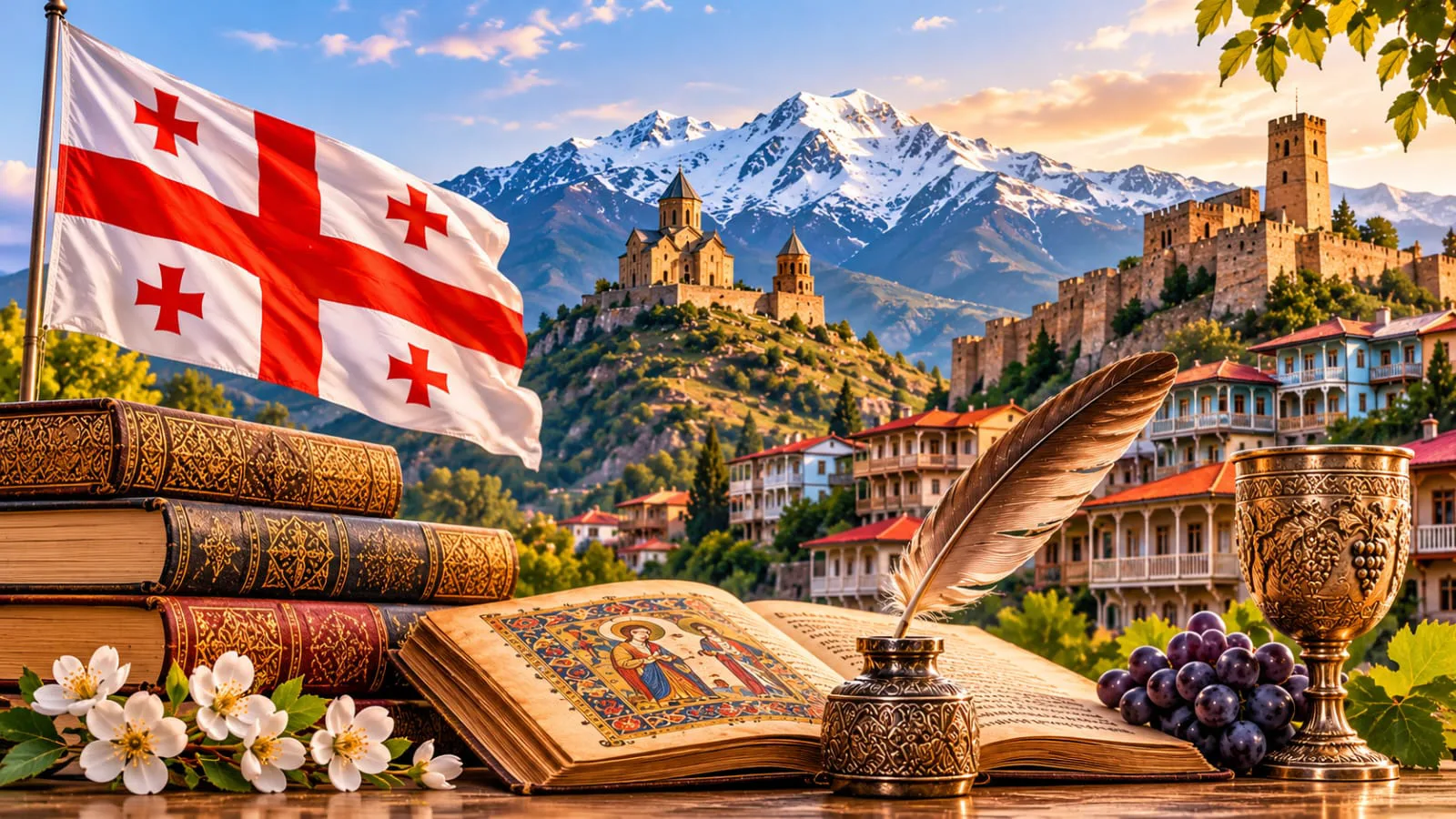
This course is designed for older Georgian emigrant students who have a good command of Georgian and are ready to study literature in depth. Its aim is to develop literary text analysis, critical thinking and written and oral expression, and to deepen Georgian cultural identity. The course consists of seven thematic modules and combines classical and contemporary texts, prose and poetry, fiction and non-fiction. Students work through close reading, discussions and debates, short essays and reflective notes, creative tasks, and by connecting the texts to their own experience. By the end of the course, students will be able to analyse a text in depth, express their own opinion in a well-argued way in writing and speech, and see the link between literature and personal life.
Homeland and Language
Module I "Who Am I?" (weeks 1–2). Texts: "My Good Country", the Georgian anthem (as a text), "Homeland". Focus: how poetry expresses attitudes towards the homeland, and what the difference is between an anthem and a poem. Activities: comparative analysis of the texts; personal reflection — "What does homeland mean to me?"; writing a new stanza for a poem or anthem.
Journey and Identity
Module I (weeks 3–4). Texts: "Letters of a Traveller" (Ilia Chavchavadze), "Bashi-Achuki" (excerpts). Focus: how travel changes a person's outlook and what "being Georgian" means through Ilia's eyes. Activities: analysis of a letter and a reasoned reply; discussion — "What unites us?"; a short essay.
The Individual and Society
Module I (week 5). Texts: "Is That a Man?!" and "The Law of Eternity" (selected episodes), "Clothes First" (age-appropriate). Focus: what it means to be "human" and how an individual stands against society. Activities: comparing characters; debates; a reflective note — "When do I feel most like myself?". Additional text: an essay or interview by a Georgian living in the diaspora, to build a personal connection. Module project: "My Identity Map" — a visual or written project in which the student combines ideas from the texts with their own experience.
Family and Memory
Module II "Childhood" (weeks 6–7). Text: "Me, Grandma, Iliko and Illarion" (Nodar Dumbadze). Focus: how Dumbadze describes childhood and what role humour and warmth play. Activities: character analysis; writing a personal memory in the same style; sharing a family story.
Dreams and Reality
Module II (weeks 8–9). Texts: "The Wishing Tree" (Giorgi Leonidze), "Iangul" (Dumbadze). Focus: what a wish is and how it changes as we grow; how literature reflects childhood dreams. Activities: analysis of symbols; creative writing — "My Wishing Tree"; comparison with personal experience.
Childhood in Poetry
Module II (week 10). Texts: "Spring" (and other selected poems); a Georgian writer's memoir of childhood (a real memoir text). Focus: how a prose memory differs from a poetic one. Activities: poem analysis; comparing the memoir with a work of fiction; a short essay — "What I took from childhood". Module project: "A Letter from Childhood" — a letter to one's childhood self or to grandparents, reflecting the outlook gained from literature.
Humans and Nature in Prose
Module III "Nature" (weeks 11–12). Texts: "The Sorrow of People" (excerpts), "The Fawn's Tale" (Vazha-Pshavela). Focus: how Vazha portrays the bond between humans and nature and what the source of sorrow is. Activities: detailed text analysis; discussion of ethical questions; reflection — "When do I feel connected to nature?".
Nature in Poetry
Module III (weeks 13–14). Texts: "The Eagle", "Autumn", selected poems by Terenti Graneli on the theme of nature. Focus: how poetry conveys the beauty and power of nature, and the difference between prose and poetry. Activities: comparative analysis of poems; writing one's own poem or prose sketch; visual interpretation.
Protecting Nature Today
Module III (week 15). Texts: an article about Borjomi-Kharagauli National Park or another protected area (from an official source). Focus: how classical literature connects to contemporary environmental issues. Activities: analysis of a non-fiction text; comparison with a literary text; a short presentation or essay. Module project: "The Voice of Nature" — a creative or research project (essay, presentation or short video) combining literature with the student's personal attitude to nature.
Kindness and Literature
Module IV "Kindness" (weeks 16–17). Text: "The Man Who Loved Literature Very Much" (Dochanashvili). Focus: how literature changes a person and what the link is between kindness and culture. Activities: character analysis; discussion — "Can a book change a person?"; personal reflection.
Compassion and Courage
Module IV (weeks 18–19). Texts: "Don't Be Afraid, Mother"; selected poems by Mukhran Machavariani. Focus: how kindness shows itself in difficult situations and the role of fear and courage. Activities: text analysis; creative writing; debates on moral dilemmas. Module project: "A Story of Kindness" — a personal or fictional story that reflects the idea of kindness and connects to the texts read.
Personal Freedom
Module V "Freedom" (weeks 20–21). Texts: "The Hermit" (Ilia Chavchavadze), "Haki Adzba" (Kiacheli). Focus: what the price of freedom is and how a person chooses their own path. Activities: comparative character analysis; debates; an essay — "What does freedom mean to me?".
Hospitality and Freedom
Module V (weeks 22–23). Texts: "Host and Guest" (selected passages); selected poems by Nikoloz Baratashvili. Focus: how tradition and freedom are connected and the role of poetry in expressing freedom. Activities: text analysis; interpreting poems; a creative task. Module project: "A Definition of Freedom" — a reasoned essay or presentation in which the student defines freedom on the basis of the texts and personal experience.
Loyalty and Sacrifice
Module VI "Love" (weeks 24–25). Text: "The Martyrdom of Shushanik" (not as a historical text, but through a discussion of values). Focus: what the price of loyalty is and how love and dignity show themselves in difficult situations. Activities: analysing the text from the angle of values; discussion; reflection — "What does loyalty mean today?".
Love and the Second Life
Module VI (weeks 26–27). Texts: "The Second Life" (selected excerpts for older students); selected poems by Galaktion. Focus: how literature reflects the complexity of love and the role of poetry in expressing emotions. Activities: analysis of characters and poems; creative writing; a comparative essay. Module project: "A Love Letter" or an analytical essay — combining ideas from the texts with a personal view.
The Contemporary Voice
Module VII "Georgia in the 21st Century" (weeks 28–29). Texts: essays by contemporary authors; diaspora stories; young people's blogs (publicly published). Focus: what concerns Georgians today and what the diaspora experience looks like. Activities: analysis and comparison of texts; personal reflection; discussion — "Where is my place in these stories?".
Culture, Language, Environment
Module VII (weeks 30–31). Texts: opinion and journalistic writing on culture, the Georgian language, books and the environment. Focus: what challenges face Georgian culture and language and what role young people play. Activities: reasoned analysis; debates; a short essay or a text in blog style.
Final Reflection
Module VII (week 32). Texts: a review of the texts read throughout the course. Focus: what has changed in my outlook and what I take from this course. Activities: a final essay or presentation; course reflection; a personal manifesto — "What kind of Georgian am I?". Final course project: "My Georgian Story" — a creative or analytical work in which the student combines the knowledge gained during the course, personal experience and a vision of the future.
Every lesson happens in real time with a mentor — never a prerecorded video.
Your mentor follows your progress and responds to how you actually learn.
Progress is tracked as you go, so you always know where you stand.
Schedules are agreed in advance and shown in Tbilisi time, wherever you are.
Georgian children and teenagers living abroad who understand basic Georgian but want to speak it more confidently. The course suits learners who grow up between two cultures and want to express their thoughts, emotions and opinions in Georgian, while building practical life skills: critical thinking about online information, digital safety, and resolving conflicts peacefully. Lessons are held online in small groups, 35–40 minutes once a week.
We will confirm the right level, group and schedule for you.
Georgian Language, Literature and Cultural Thinking
Course information
An online course for children and teenagers living abroad who need to strengthen their spoken Georgian and build practical life skills. Students learn to express their opinions freely in Georgian, reason and argue on practical topics such as cultural diversity, media literacy and everyday ethics. Lessons are interactive and built on discussions, audio-visual materials and real-life cases. By the end of the course, students will be able to describe their emotions and dual cultural experience in Georgian, critically evaluate information spread on social media and the internet (spotting fakes), and communicate peacefully in Georgian in everyday relationships and conflict situations.
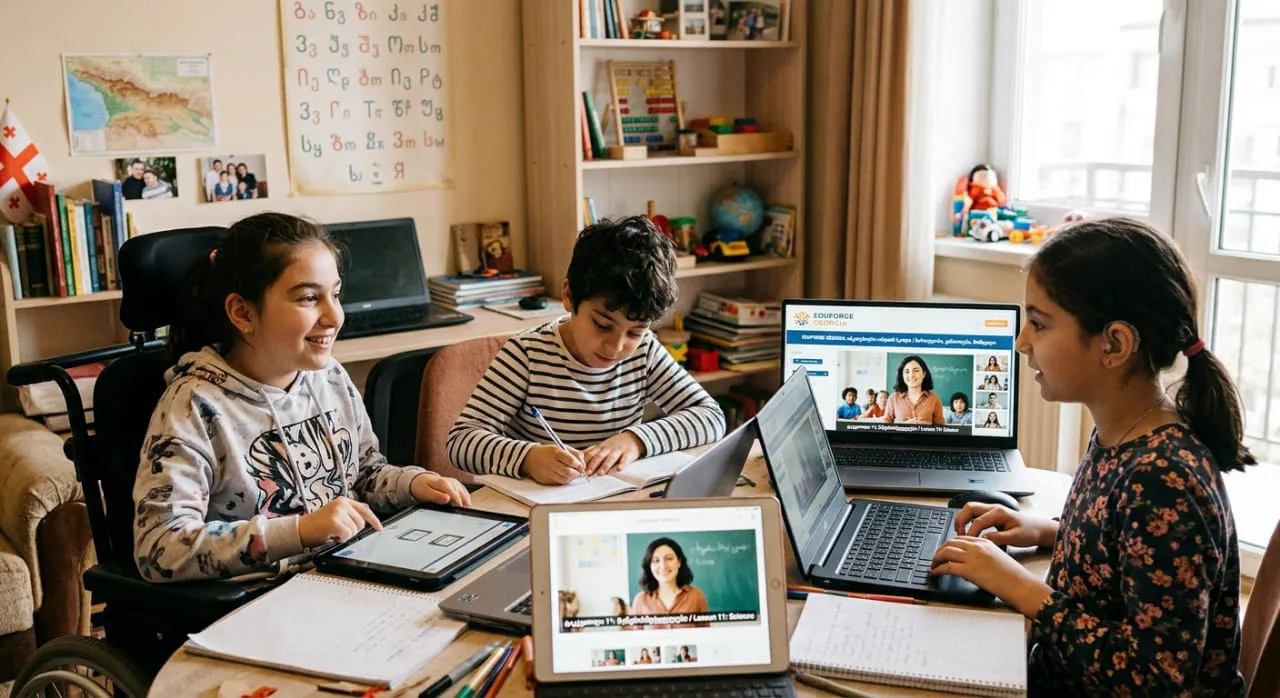
The program is intended for students with special educational needs (SEN) and with academic, behavioral, ADHD-related and emotional difficulties. It is delivered through online distance learning, individually or in small groups, within an individual education plan (IEP) or an adapted program. The main aim is to support the students' academic, cognitive, speech, behavioral, attention-regulation and emotional skills, to maximize their engagement in learning and to help them realize their individual potential. Teaching relies on adapted online strategies such as large clear fonts, visual schedules, short learning blocks, movement breaks, visual timers and positive reinforcement. The 16-week program (semester-based or continuous support) involves parents throughout and ends with an assessment of progress, a portfolio presentation and recommendations for the future.
The course is designed for Georgian children in grades VII–IX who live in the diaspora. Its aim is to show where the gods and heroes of films, comics and games come from, and to strengthen the learners' living connection with the Georgian language and cultural memory. Students get to know Scandinavian, Greek-Roman, Eastern and, above all, Georgian mythology, from Amiran to the Golden Fleece of Colchis. The course is taught online in a small group of up to 12 students, through video meetings and a shared Padlet space. Every lesson includes a Georgian Language Corner of about 10 minutes: 5–7 new words, a short Georgian text and a short writing task at two difficulty levels. By the end, students can tell a myth, a legend and a historical fact apart, read a source critically, and present their own comic (manga) or board game together with a Padlet portfolio.